| Year
(of specifications) |
2011 |
| Engine |
4.8
litre V10 |
| Transmission |
6-speed
automatic RWD |
| Max
speed |
201 mph
|
| 0-60
mph |
3.7
seconds |
| Horsepower |
552
horsepower @ 8,700 rpm |
| weight |
1,480
kgs / 3,263 lbs |
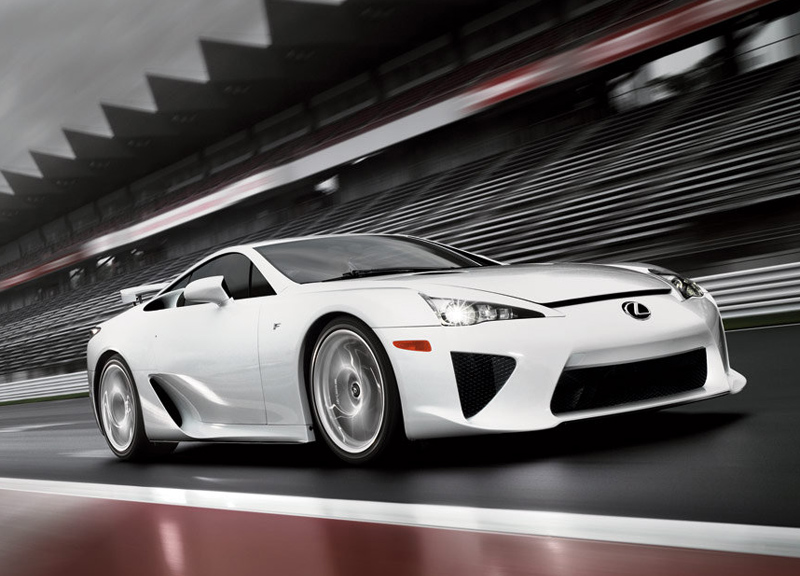
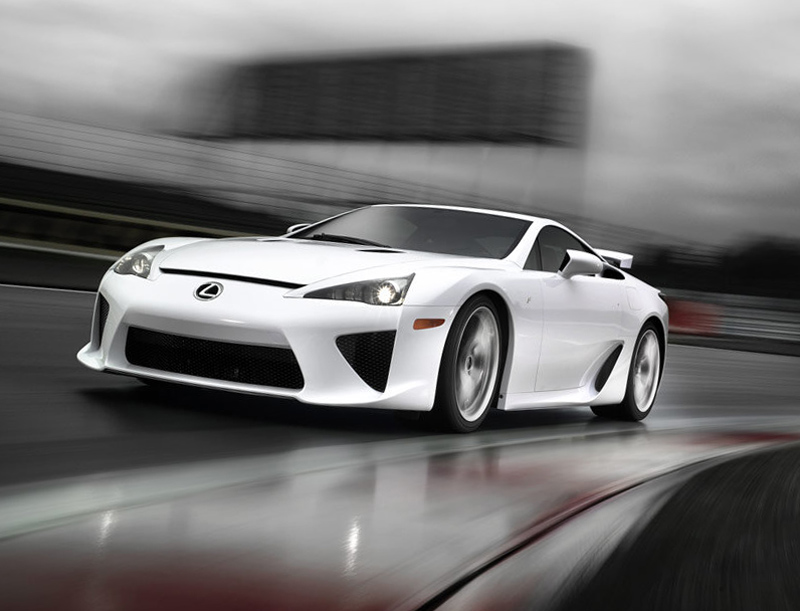
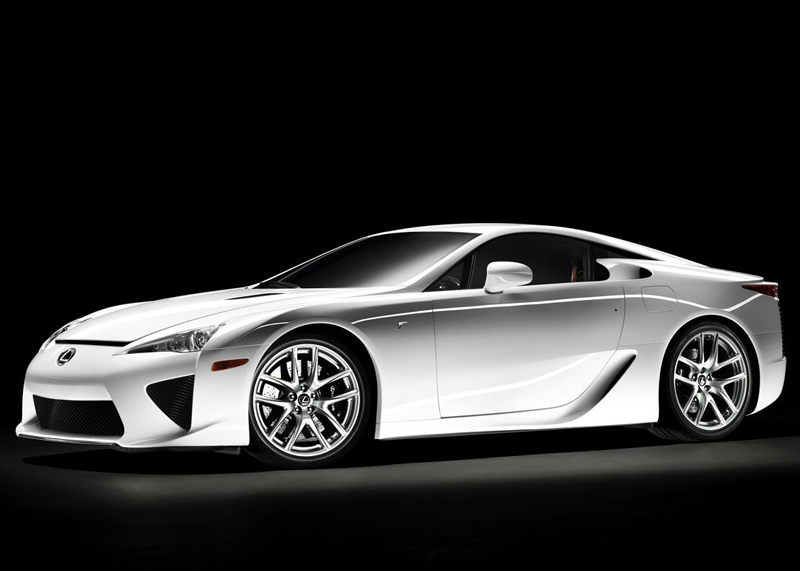
The long-awaited Lexus LFA supercar was finally revealed at
the 2009 Tokyo Motor Show. The LFA has been in development since
2005, with two different concept versions being produced along
the way. The first
LFA concept had noticeably more angular lines than the second
LFA prototype from 2007 - which was significantly closer
in design to the production model.
Scheduled to go into production towards the end of 2010, the
first LFA's should be arriving at their new homes sometime in
2011. And with only 500 examples being made in total, and a
price tag of around $400,000 (£336,000 GBP / €368,000
) you can bet they'll be nice homes.
Surprisingly despite the hefty price tag it's been rumored that
Lexus will be losing money on each LFA sold! So why would Lexus
make the car in the first place? Well the company's suffering
from a declining and aging ownership base and the firm is keen
to reverse that trend by injecting some excitement into the
brand. A 200 mph supercar could be the cure.
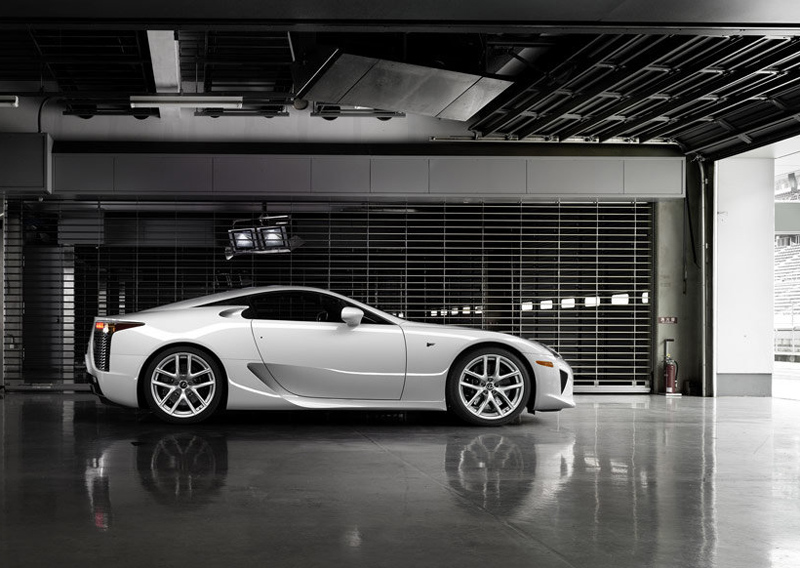
The Lexus LFA features extensive use of carbon
fibre in its construction. This not only helps to keep the
weight down, but it has also helped the car's engineers achieve
an optimum front/rear weight distribution of 48/52. The unique
carbon fiber cabin is 100kg (220 lbs) lighter than a comparable
aluminum unit while still retaining the same strength and rigidity.
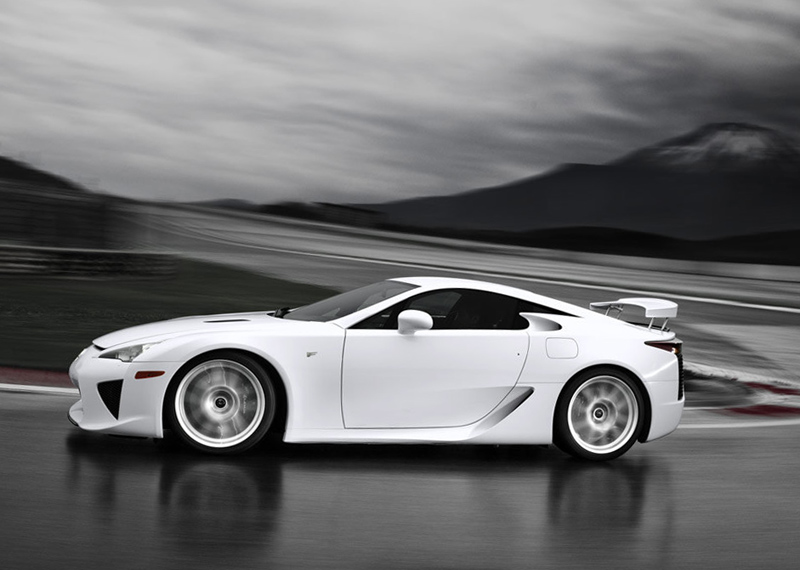
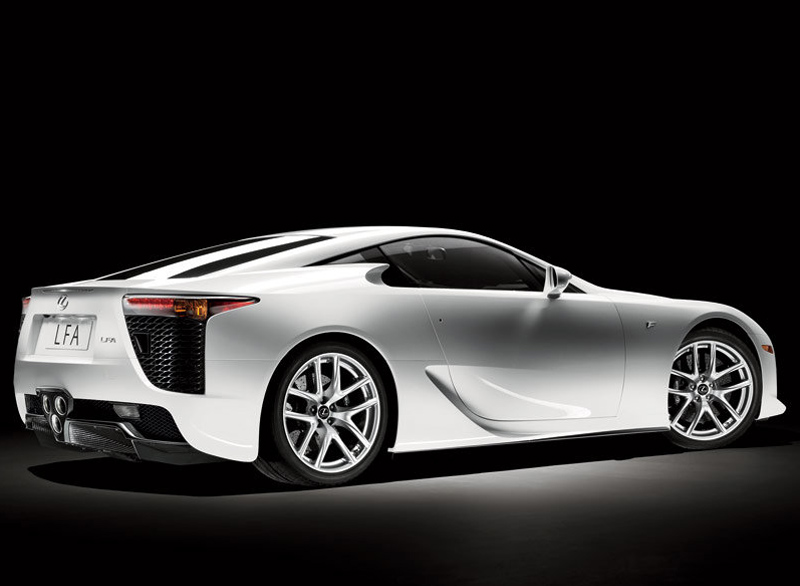
The bodywork also uses carbon fibre components to keep the overall
weight to a minimum. The exterior design includes carefully
tuned aerodynamics to clean up the airflow around the car. This
has resulted in features like a flat underbody, a rear diffuser
and a velocity-controlled rear spoiler.
Powering the LFA is a potent and hi-tech drivetrain which starts
with 552 horsepower, 4.8 litre V10 built using lightweight metals
like aluminium, magnesium and titanium.
This engine features titanium valves, ultralight rocker arms
with a diamond-like coating, and a fully integrated lower crankcase
that reduces pumping losses at high RPMs. This engine, which
was purpose-built for the LFA, offers up 90% of its peak torque
between 3,700rpm and the 9,000rpm redline.
Independent, electronically controlled throttle bodies ensure
precise air-feed to each of the 10 cylinders, enabling immediate
engine response from the accelerator pedal. The engine response
time is approximately half the normal response time of a single-throttle
valve. To make sure the LFA sounds as good as it looks the car
features an acoustically tuned exhaust note.
The power is sent to the rear wheels via a six-speed ASG (Automated
Sequential Gearbox) unit which features heavy-duty synchronizer
rings and a newly developed gearshift actuator, providing the
driver with a very direct shift feel. Four selectable driving
modes, and seven shift-speed options mean that the LFA can upshift
in just 0.2 seconds on its fastest setting. Gear shifts are
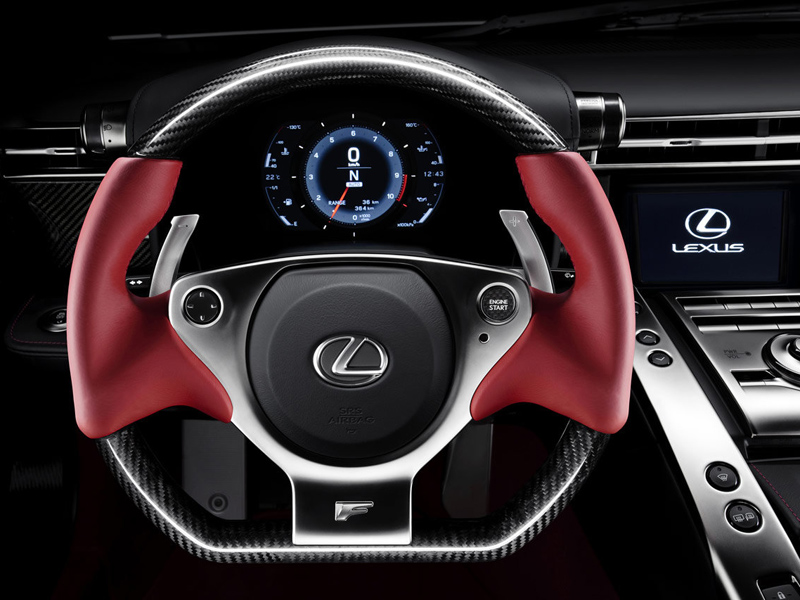
made by pulling on the paddles which are mounted on the steering
column.
When it comes time to reel in the power the Lexus LFA can be
brought to a standstill in race-car like fashion thanks to the
high-performance (Carbon Ceramic) CCM brake discs and Electronically
Controlled Braking system which allows for extremely rapid yet
stable braking.
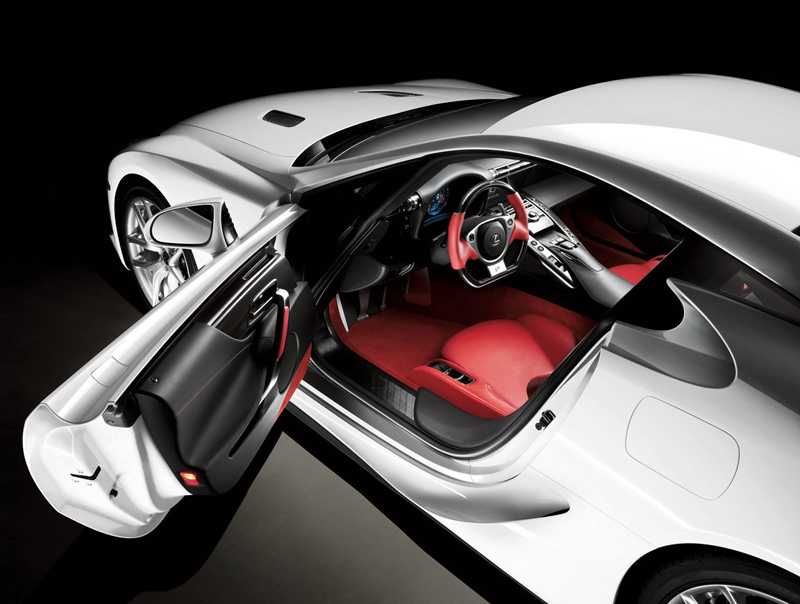
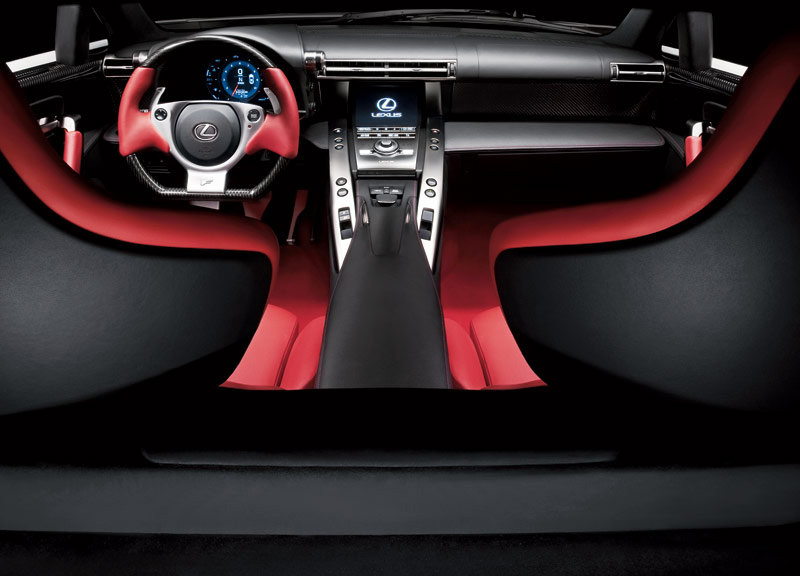
Inside the LFA the occupants are treated to slightly more race-orientated
styling than would be normal for a Lexus model. The carbon fibre,
multifunction steering wheel features an 'engine start' button
on the right side, and a thumb-operated control pad on the left.
The driver and passenger are separated by a high center console
which houses many of the secondary controls and a multi-mode
LCD display.
---------------------------------------------------------------------
Review by: El Bueno Enchilada
This is what happens when you let toyota engineers go crazy
on a project. It may not be the fastest, most beautiful, or
most passionate supercar in the world. But for a car capable
of holding its own against more established aristocratic adversaries,
on its very first try, is quite an amazing accomplishment.
Similar and related vehicles:
 Lexus IS 250C
 Lexus SC430
 Lexus IS-F
|
|